Step 1
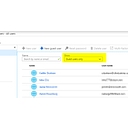
Filter by what matters
Pricing model. Deployment. OS support. Trial access. Use the filters to remove tools that cannot work in your environment, before a single vendor knows your name.
Filter by category, pricing model, deployment, and trial access. Open any tool to get the real pricing, honest pros and cons, and the specific alternatives worth comparing, all before your first sales call.
Most buying teams waste weeks on tools that were never going to fit. This page surfaces the signals that matter: pricing model, deployment type, OS coverage and trial access, so you can cut the obvious mismatches before anyone books a demo.
Open any tool to get the full review: what it costs, what it does well, where it falls short, and which alternatives to compare it against.
Step 1
Pricing model. Deployment. OS support. Trial access. Use the filters to remove tools that cannot work in your environment, before a single vendor knows your name.
Step 2
Every product page has specific pros, cons, and pricing. No feature theater. Each review tells you what the tool does well, where it falls short, and what questions to ask on a sales call.
Step 3
Head-to-head pages for the two or three that survived. Open a side-by-side comparison to see exactly where the remaining options differ, then decide with data, not demos.
Endpoint Management
Endpoint management with a full RMM feature set and integrated backup, with no extra charge for technician seats.
RMM Software
Per-technician pricing with no endpoint limits, bundling RMM, PSA and remote access in one interface for growing MSPs and IT teams.
Help Desk Software
ITSM platform with a structured service catalog, asset tracking, and change management, priced per agent for internal IT teams.
SD-WAN
Infrastructure monitoring priced by sensor, where every monitored metric or interface counts as one sensor on the license.
Browse by category
Manage, secure, and automate endpoints across distributed environments.
See category picksTrack infrastructure health, uptime, latency, and dependency issues.
See category picksRemote monitoring and management for lean internal IT or MSP-style workflows.
See category picksMonitor application performance, trace bottlenecks, and diagnose user-facing performance degradation.
See category picksBuild, test, and ship applications with stronger collaboration, tooling, and delivery support.
See category picksAutomate deployment, configuration, provisioning, and operational workflows across development and infrastructure teams.
See category picksSoftware listings
This is not a “top 10” list. Every tool here has a full review with pricing, pros, cons, and alternatives. Use the filters to find what fits your environment, then open the profiles that survive.
Endpoint management with a full RMM feature set and integrated backup, with no extra charge for technician seats.
Per-technician pricing with no endpoint limits, bundling RMM, PSA and remote access in one interface for growing MSPs and IT teams.
ITSM platform with a structured service catalog, asset tracking, and change management, priced per agent for internal IT teams.
Infrastructure monitoring priced by sensor, where every monitored metric or interface counts as one sensor on the license.
Cloud-delivered patching for mostly-Windows fleets, with a free tier covering up to 200 devices so coverage can be checked before any spend.
Key-value and document store whose hybrid memory architecture targets latency-sensitive workloads in financial services and adtech.
Android-first device management for kiosk, signage and unattended fleets, with remote control and silent APK deployment at its core.
A serverless document and key-value store where AWS handles replication, scaling and availability, billed per request by default.
Red Hat's commercial packaging of Ansible, wrapping the familiar automation engine in role-based access control, audit logging and a browser-based runtime.
Cross-platform remote desktop software with a lightweight client that holds connection quality together over constrained networks.
Wide-column NoSQL database with linear horizontal scaling and no single point of failure, aimed at write-heavy distributed workloads.
Cisco's APM platform maps business transactions from end-user experience back through application code and infrastructure dependencies.
Multi-model database that keeps documents, graphs and key-value data in one engine behind a single query language.
IT asset management built around customization: field layouts, workflows, and record relationships all bend to how a team tracks hardware.
Developer-first identity platform from Okta, with an extensive authentication library and a rule engine for customizing login flows per application.
Cross-platform patching from the cloud, with a worklet system that pushes the same agent into configuration automation work.
Datto's PSA platform for MSPs, tied closely to the vendor's own backup and RMM products to cut integration overhead.
Cloud network monitoring that maps topology and analyses traffic, discovering switches and routers automatically over SNMP.
Managed VPN endpoint wired natively into AWS VPC, IAM and CloudWatch, billed by connection-hour and data transferred.
Microsoft's globally distributed multi-model database, with configurable consistency levels and turnkey replication across regions.
Microsoft's integrated source control, pipelines, boards, and test plans, licensed per user and scaling to multi-project enterprises.
Privileged remote support with session recording, approval workflows and audit trails in place before a technician ever connects.
HCL's endpoint management platform spans heterogeneous OS estates and has a record of holding up at six-figure device counts.
Git hosting that earns its place through Atlassian ties, with Jira issues linking directly to pull requests and Pipelines handling CI/CD.
Layered endpoint protection software with anti-exploit, behavioral detection, and optional EDR, managed from the cloud or on-prem.
Enterprise ITSM with deep process automation and AI-based ticket routing, tied into BMC's wider IT operations portfolio.
Converged SASE platform that folds SD-WAN, firewall, CASB and ZTNA into a single cloud-delivered architecture for distributed sites.
Monitoring available self-hosted or cloud-managed, scaling across three orders of magnitude of host count without a change of product.
Infrastructure-as-code with a declarative Ruby DSL, long established in enterprise Linux estates with large recipe libraries.
Configurable ITSM from Ivanti where process and data model changes happen without code, a frequent mid-market reason to pick it.
CI/CD platform with strong Docker and container workflow support, plus a concurrency model that scales pipelines without pre-provisioned compute.
A VPN client that arrives with the Cisco network stack, most often in organizations already running ASA appliances and Cisco firewalls.
Cloud-managed networking with hardware-tied licensing, giving administrators central policy control without on-prem management servers.
SASE platform on Cloudflare's edge network combining Zero Trust access, CASB, DLP and gateway functions, billed on usage.
RMM software for MSPs running multi-client automation at scale, with deep scripting and a wide third-party integration set.
PSA and business management for MSPs, pulling ticketing, billing, project work and procurement into one system of record.
Remote access and control licensed per technician, with a self-hosted path for teams that need data residency control.
Distributed document database with a built-in caching layer and SQL-like query language for low-latency reads on flexible schemas.
Open source document database with an HTTP API and multi-master replication, aimed at offline-first mobile and edge applications.
Cloud-native endpoint detection and response running on one lightweight agent, fed by CrowdStrike's global sensor network.
Workforce SSO and privileged access management in one product line, aimed at enterprises with formal privilege controls.
AI-model endpoint protection that decides locally without cloud lookups, so it keeps working on disconnected or air-gapped machines.
Application performance monitoring that sits inside Datadog's wider infrastructure, log and metrics platform, with automatic service maps.
SaaS infrastructure monitoring with over 600 integrations and one agent collecting across cloud, on-prem and container estates.
Cloud-delivered RMM software for MSPs, covering automation scripting, patch management, and remote endpoint monitoring.
Discovery-driven IT asset management that maps infrastructure dependencies across network, cloud and on-prem estates.
The standard developer-facing container environment for building and running Docker containers locally on Windows and macOS.
Network monitoring priced per network instead of per device, aimed at MSPs and IT teams covering many separate sites.
Two-factor and multi-factor authentication from Cisco, with self-service enrollment that keeps rollout overhead off the IT team.
Full-stack observability with AI-driven anomaly detection and automatic dependency mapping across cloud, containers and on-prem.
Logs, metrics and traces in a single interface, built on Elasticsearch and OpenTelemetry, deployable as a managed service or self-hosted.
Distributed search and analytics engine that indexes text, aggregates logs and answers analytical queries at substantial scale.
Antivirus, web control, full-disk encryption, and optional EDR across Windows, macOS, and Linux from a single console.
Google's application backend bundling a real-time document database with authentication, hosting and cloud functions, billed by usage.
SD-WAN capabilities embedded in FortiGate next-gen firewalls, so Fortinet shops add WAN optimization without a separate appliance.
Customer support ticketing with clean email-to-ticket conversion, agent collaboration features and a free plan that is genuinely usable.
Source code hosting, code review and collaborative development on the platform most open source and enterprise teams default to.
Workflow automation and CI/CD built into GitHub, priced by compute minute, with a large library of community-maintained actions.
Single application covering the whole path from a commit to a deployed, scanned release, with no second product in the chain.
Open source IT asset management and service desk with LDAP integration and network discovery through FusionInventory.
Productivity suite that doubles as an identity provider, giving SSO and directory capabilities without a separate IAM purchase.
Remote support, endpoint patching and helpdesk ticketing in one product, priced per technician for SMB and mid-market IT teams.
Remote support covering attended and unattended sessions, priced per technician with little commercial complexity attached.
Hosted Prometheus, Loki, and Tempo backends sitting under Grafana's open source visualization stack, billed on usage.
ITSM platform with ITIL-aligned incident, problem, change and asset management held together in a single interface.
PSA built for MSPs, with project management, CRM, ticketing and billing running inside a single cloud application.
CI/CD plus cloud cost management in one platform, with a feature flag module and a GitOps approach to how changes reach production.
Customer support software built around shared email inboxes, plus live chat and a customer-facing knowledge base.
Cross-platform UEM that handles Windows, macOS, iOS and Android in one console, with kiosk and digital signage modes built in.
JetBrains' flagship IDE, carrying the deepest code intelligence available for the JVM languages: Java, Kotlin, Groovy and Scala.
Help desk and ITSM with a visual process builder, so workflow changes land without anyone having to write a script.
Endpoint management for large mixed-OS estates, with patch intelligence and risk-based prioritization in the platform.
The reference platform for Apple device management in the enterprise, with native Apple Business Manager and DDM support.
Open source CI automation server with the largest plugin library in the category, covering nearly any build, test or deployment integration.
IT service management wired into Jira Software's boards, for organizations where development and IT operations work the same backlog.
Cloud directory combining device management, SSO, MFA, and LDAP/RADIUS, priced per device across Windows, macOS, and Linux.
Apple-first MDM for macOS and iOS fleets, shipping with pre-built compliance blueprints for common security baselines.
Business management system for MSPs covering PSA-style ticketing, time tracking and billing, paired with Kaseya VSA.
Open source identity and access management server speaking OIDC, SAML and LDAP, widely used as an internal SSO and identity broker.
Multi-threaded fork of Redis aimed at higher throughput on the same hardware, with API compatibility kept intact.
Container orchestration for deploying, scaling and managing containerized applications, and the standard managed services build on.
Network discovery and IT asset management that scans on-prem and cloud environments automatically, with pricing based on asset count.
SaaS monitoring with deep coverage of on-prem hardware, network gear, cloud services and containers under a single platform.
Remote support for enterprise help desks, with session recording, detailed audit logging, and multi-monitor navigation.
Endpoint protection rebranded from Malwarebytes Business, with threat detection, EDR and DNS filtering split across tiers.
APM for application performance, database response times and server health from one console, available on-prem or cloud-hosted.
IT asset management covering hardware and software lifecycle, procurement and license compliance in one ManageEngine module.
Patch management, software deployment, OS imaging, and MDM for Windows, macOS, and Linux from one management console.
One console handles iOS, Android and Windows Mobile devices, hosted in the cloud or run on-prem where residency rules apply.
Network and server monitoring with automated discovery, threshold-based alerting and a topology view across switching, routing and physical servers.
ITIL-aligned service desk from ManageEngine, available on-prem as well as hosted, with change and problem handling beside incidents.
Enterprise endpoint protection wired natively into Microsoft 365, Entra ID, and the Defender XDR portal, and often bundled with E5.
Microsoft's cloud identity platform providing SSO, MFA, Conditional Access and device identity across Microsoft 365 and beyond.
Workforce SSO, customer identity and MFA in one identity platform, at pricing that stays reachable for SMB and mid-market teams.
Cloud MDM for iOS, Android and Windows devices, with a free tier that puts no cap on how many devices it will manage.
Fully managed MongoDB in the cloud, with global clusters, automated backups, and a built-in performance advisor.
RMM from the vendor behind MSP360 Backup, strongest commercially for MSPs already running that backup product.
PSA for small and mid-size MSPs, with a native link between service ticketing and N-able's N-central and N-sight monitoring.
Enterprise-grade RMM aimed at MSPs carrying large, mixed client estates spanning Windows, macOS and Linux endpoints.
The commercial edition of Nagios Core: on-prem server monitoring with a deep plugin library and an interface showing its age.
Graph database with a native query language, Cypher, and real strength in traversing deep and complex relationship networks.
Full-stack observability billed on data ingest and user seats instead of host count, which changes the math for host-heavy estates.
Business VPN and Zero Trust network access priced per user, for teams without dedicated network infrastructure of their own.
Deployment automation covering environment promotion, reusable deployment process templates and runbooks for operational tasks.
Identity platform with one of the largest pre-built application integration catalogs, which makes it the default candidate for workforce SSO.
Enterprise PAM and identity governance for organizations that already have a formal privileged-access program written down.
SSO and MFA whose SmartFactor authentication applies contextual risk scoring to individual access decisions, priced per user.
Self-hosted VPN server for teams that want the endpoint on their own infrastructure, licensed per user above a free two-user tier.
Cloud-delivered VPN service from the OpenVPN organization, giving teams the protocol's client compatibility with no servers to run.
Enterprise SD-WAN with Palo Alto's SASE security built in, for organizations consolidating WAN and security in the same project.
Monitoring for infrastructure, applications, and network devices, available cloud-hosted or on-prem, with an open source edition.
Remote desktop tuned for graphics-intensive work: video editing, 3D design and creative production on GPU-backed workstations.
Windows patch management and software deployment that competes on simplicity, with a team patching endpoints inside an hour.
ZTNA and business VPN with automatic Wi-Fi protection and split tunneling, replacing hardware VPN appliances with a cloud service.
Cloud identity platform covering both workforce and customer identity use cases inside one Ping Identity product line.
API development and testing platform that grew from a REST client into full lifecycle coverage with docs, mocking and monitoring.
Open source monitoring system and time-series database, now a CNCF project with heavy adoption in Kubernetes-native infrastructure.
Business VPN on a privacy-first architecture from the organization behind ProtonMail, priced per user on cloud delivery.
RMM with a genuinely usable mobile console: the iOS and Android app carries real-time alerting and remote remediation.
Configuration management with a declarative model for infrastructure state, long established in enterprise Linux environments.
Endpoint systems management that puts asset tracking, software distribution, OS imaging and update delivery on one Windows and macOS console.
Document database with ACID transactions spanning documents and collections, a guarantee many NoSQL engines trade away for speed.
Commercial Redis adding active-active geo-distribution, automatic failover and persistence options beyond the open source build.
Remote desktop software from IDrive with a low per-user price and straightforward setup across Windows, macOS and Linux.
Browser-based collaborative coding environment where projects run and get shared by URL with nothing installed locally.
HR and IT in one system of record: employee onboarding, payroll, device management, and application provisioning together.
Multi-factor authentication and identity from RSA, with deep roots in financial services, defense and government accounts.
Self-hostable remote desktop with a relay server you run and end-to-end encryption, free of commercial licensing.
Enterprise identity governance built around periodic access review, role definition and keeping incompatible duties apart.
Device management for Windows, macOS, iOS, and Android, with kiosk mode, content management, and app distribution.
Cassandra-compatible database rewritten in C++, targeting far lower latency and higher throughput from unchanged hardware.
Infrastructure monitoring and log management for teams that find Datadog or New Relic priced above their current scale.
Check-based monitoring pipeline that collects, filters and routes observability data as an aggregation layer over what already runs.
Endpoint protection and EDR with autonomous response that can isolate and remediate a threat without an analyst in the loop.
IT asset management inside the ServiceNow platform, covering hardware and software lifecycle, license compliance and CMDB ties.
Enterprise ITSM with process automation, AI-assisted routing and deep ties into configuration management and asset data.
SD-WAN with application-aware path selection and WAN optimization included, now sold under the HPE Aruba portfolio.
Server, website, network, and cloud monitoring from Zoho's portfolio, billed per host for predictable cost at smaller scale.
Open source IT asset management with barcode support and straightforward checkout and check-in workflows, self-hosted or cloud.
Network performance monitor with deep Cisco and multi-vendor SNMP support, widely deployed across large switching and routing estates.
Third-party application patching layered onto WSUS and SCCM, extending Windows update coverage past Microsoft's own catalog.
Server and application monitoring with out-of-the-box templates for hundreds of applications and correlated performance analysis.
Cloud-based ITSM pairing ITIL-aligned ticketing with asset management and a self-service portal, priced per agent.
Endpoint protection pairing deep learning malware detection and CryptoGuard ransomware defense with an optional managed detection and response service.
Remote desktop on a flat per-user fee with no per-session charges and tier differences that can be read in one sitting.
Full-stack observability on Splunk's data pipeline, with streaming telemetry and automatic baselining for large estates.
PSA and RMM in one platform for smaller MSPs, with ticketing, client management, monitoring and automation under one fee.
Broadcom's enterprise endpoint protection, with a long history in large Windows environments and coverage from prevention through response.
RMM and PSA together on one flat per-technician price, with no module add-ons stacked on top of the base number.
Help desk and ITSM with a genuine on-prem option alongside cloud, giving mid-market and enterprise buyers residency choices.
Zero-config mesh VPN on WireGuard that builds private networks out of the identity provider a team already uses.
Remote desktop and support platform with unusually wide device and OS coverage, reaching mobile, IoT and industrial equipment.
Declarative infrastructure as code whose provider model reaches far past any single cloud, all from one configuration language.
Enterprise endpoint protection from Trellix, the company formed by the merger of McAfee Enterprise and FireEye.
Endpoint security combining signature-based, behavioral and machine learning detection across mixed Windows and macOS estates.
Microsoft's full IDE for .NET and C++ development, with a deep debugger, profiler and integrated Azure and database tooling.
Open source code editor from Microsoft whose extension ecosystem covers close to every language and workflow in use.
Operations management for vSphere, NSX, and vSAN, with capacity planning, performance analytics, and configuration management.
Cloud-delivered endpoint protection and EDR from VMware, wired into the vSphere security ecosystem for virtualized estates.
SD-WAN platform integrated with VMware's networking and security portfolio, aimed at multi-cloud, multi-site enterprise WANs.
Open source VPN protocol with a small codebase, high throughput and configuration far simpler than IPsec or OpenVPN.
Enterprise unified endpoint management across Windows, macOS, iOS, and Android, tied into Horizon and Workspace ONE Intelligence.
Open source monitoring covering network, server and application layers, with no per-host licensing at any environment size.
Customer support platform with a mature ticketing engine, a self-service portal and one of the larger third-party integration ecosystems.
Remote support from the Zoho suite, billed per technician, covering both ad hoc and always-on access to a remote machine.
Customer support ticketing from Zoho with context-aware ticket views and a sentiment analysis layer, priced per agent.
Zero Trust network access from Zscaler's global cloud, granting access to specific applications instead of whole network segments.
Keep exploring
Category pages show you who competes, what they charge, and which tools fit your environment, before any vendor shapes the narrative.
Manage, secure, and automate endpoints across distributed environments.
Track infrastructure health, uptime, latency, and dependency issues.
Remote monitoring and management for lean internal IT or MSP-style workflows.
Monitor application performance, trace bottlenecks, and diagnose user-facing performance degradation.
Next click
See exactly where two tools differ on pricing, features, deployment, and who each one fits best, in one page.
Comparison
Atera vs Action1 compares fit, tradeoffs, and operational strengths for IT buyers.
Comparison
NinjaOne vs Atera compares fit, tradeoffs, and operational strengths for IT buyers.
Comparison
NinjaOne vs ManageEngine Endpoint Central compares fit, tradeoffs, and operational strengths for IT buyers.
Comparison
Auvik vs Datadog Infrastructure compares fit, tradeoffs, and operational strengths for IT buyers.